Password Protect Office Files
Here is how you can password protect your Office files;
Password Protect Word/Excel 2003
Here is a quick tutorial that will teach you how to password protect files from word/excel 2003;
Setting a Password in an Office Application
I have had a few emails from people asking me to explain just exactly how you set a password for a Microsoft Office application. Instead of explaining it to you I thought it would just be easier if you watched this quick tutorial on how to do it;
Password Fatigue
Password fatigue, also known as Password chaos or identity chaos, is the feeling experienced by computer users who are required to remember an excessive number of passwords as part of their daily routine, having to use a large amount of different software applications which require separate authentication.
An example would be a user who needs needs a password to log in to their workstation, then one for their e-mail, one for the company intranet, one for a client database, one for a document archiving system.
This already amounts to five accounts, for which the user names may not necessarily be the same. Even if user names are identical, passwords may not be the same depending on each application’s security requirements (i.e. one requires 10 characters minimum, another has 8 maximum; one needs at least one capital letter or number, another does not accept capital letters; one needs the password to be changed every week, another can only be changed once a month).
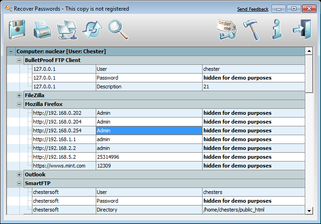
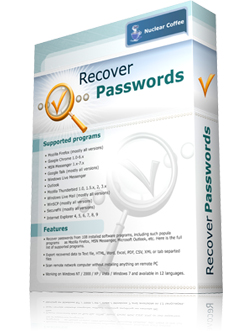
Password fatigue can often lead to the user losing or simply forgetting important passwords, if this happen you need to obtain a password recovery software. You can download this software by clicking the link below;
Download the password recovery software
Retrieve Microsoft Word Passwords
Have you lost or misplaced your password for Microsoft Word? Let me tell you a real story of someone who did;
“Andy was in the third year of a college degree and somehow managed to lose his password to a massive mid-term assignment which made up near half of this course’s marks. He talked to his teacher but they said it wasn’t their fault and Andy would have to re-do it!
There was no way Andy could have re-written all that work in the 2 days before it was due, so he had to fail that unit and re-take it”
This example is not uncommon, thousands of people each year lose important passwords to Microsoft Word and cannot get vital files or folders.
Well there is a solution! There is specialised software designed to retrieve passwords on all Microsoft Office applications, including word. This software has been tested and proved to get back as many as 99.76% of all passwords.
If you would like to download the password retrieve software click the link below.
Retrieve Microsoft Word Passwords - Free Download Now
Recover Microsoft Excel Passwords
Microsoft Excel is one of the more popular bits of software on any Windows operating system, and many people all over the world have been stumped trying to access it when they forget their passwords.
Everyone from students to business workers have forgetten their passwords leading to untraceable and lost data. This can leave people out of time and out of money!
Luckily there is specialized software developed for all Microsoft Office application that traces and re-finds all lost passwords. So far tens of thousands of people have downloaded this new sofware and recoved their lost excel passwords.
If you want to recover a lost excel password than you have to just click the link below and start running the excel password recovery software.
Recover Your Excel Password Now
Changing a Password
Usually, a system must provide a way to change a password, either because a user believes the current password has been (or might have been) compromised, or as a precautionary measure.
If a new password is passed to the system in unencrypted form, security can be lost (e.g., via wiretapping) even before the new password can even be installed in the password database. And, of course, if the new password is given to a compromised employee, little is gained.
Some web sites include the user-selected password in an unencrypted confirmation e-mail message, with the obvious increased vulnerability.
Identity management systems are increasingly used to automate issuance of replacements for lost passwords, a feature called self service password reset. The user’s identity is verified by asking questions and comparing the answers to ones previously stored (ie, when the account was opened).
Typical questions include “Where were you born?,” “What is your favorite movie?” or “What is the name of your pet?” In many cases the answers to these questions can be relatively easily guessed by an attacker, determined by low effort research, or obtained through social engineering, and so this is less than fully satisfactory as a verification technique.
While many users have been trained never to reveal a password, few consider the name of their pet or favorite movie to require similar care.
Secure And Manage Your Passwords
Passwords protect your most sensitive personal, financial and business information. They are the key to accessing membership, financial, and other web sites that you are a member of. All sorts of havoc can occur in your life if some unauthorized person discovers your password. Here are some tips for making that event less likely:
1. Don’t use easily guess passwords like a date of birth, spouse, child’s or pet’s name. In fact, don’t use any word or phrase that even remotely relates to you or your world. You need to use a password which is difficult for anyone to guess but is not so difficult for you to remember.
2. Use a combination of upper and lower case letters, symbols and numbers to make the password harder to guess. Some web sites do not allow symbols so you may not be able to always use them. Almost all web sites treat passwords as CaSe SeNsItIvE so mixing case is a good idea.
3. Make your password at least eight characters long. Longer is even better. The more characters there are the harder it will be to guess.
4. Use a different password for each account or web site. That way if one gets compromised you’ll still be protected elsewhere.
5. Change your passwords frequently. Pick a period, like the 15th of each month, and change all of your passwords on that date.
6. Do not write your passwords down anywhere. You never know who is checking your drawers or file cabinet when you’re not around. Also, do not store your passwords in an electronic filing device like a PDA. That’s just as insecure as a piece of paper if you lose the device and someone who is less than honest finds it.
7. Never share your password with anyone else. If you have to, then change it immediately afterwards.
8. Avoid using “dictionary” words. There are password-cracking programs that will check every word in the dictionary. If you want to use words then break them up with non-word characters. For example: BuIlT*99$APPlE is difficult for anything other than the most sophisticated password-cracking program to guess because it is combined with non-alphabet characters and it is in mixed case.
9. Don’t use “password” or “none” as your password! Don’t even use “PaSsWoRd”!
10. If someone calls or sends you e-mail claiming that they are from your bank, or credit card company, or anywhere else that you have a password with, NEVER give them your password or PIN no matter what story they tell you. It’s a scam. No one will ever ask for your password. Legitimate administrators of your password-protected accounts do not need your password to access your files during the normal course of their business dealings with you.
Change Windows Account Passwords
From time to time you may need to change the passwords for certain accounts you have on a computer, this is a very simple task to perform.
You need to be logged in as an administrator to change other passwords, when you are just do this;
- Open up control panel
- Click user accounts
- Click manage another account
- Select the account you need to change the password for
- Click change the password
- Add in a new password
- Done
Passwords
In computing, a password is a word or string of characters that is entered, often along with a user name, in modern times usually into a computer system to log in, or to gain access to some resource. Passwords are a common form of authentication. Full security requires that the password be kept secret from those not allowed access.
The use of passwords is known to be ancient. Sentries would challenge those wishing to enter an area or approaching it to supply a password or watchword.
Sentries would only allow a person or group to pass if they knew the password. In modern times, passwords are used to control access to protected computer operating systems, mobile phones, cable TV decoders, automated teller machines (ATMs), etc.
A typical computer user may require passwords for many purposes: logging in to computer accounts, retrieving e-mail from servers, accessing programs, databases, networks, web sites, and even reading the morning newspaper online.
Despite the name, there is no need for passwords to be actual words; indeed passwords which are not actual words are harder to guess, a desirable property. Some passwords are formed from multiple words and are more accurately called a passphrase.
The term passcode is sometimes used when the secret information is purely numeric, such as the personal identification number (PIN) commonly used for ATM access. Passwords are generally short enough to be memorized.